Selecting office chairs for a corporate workplace is not just a matter of design, color or price. For procurement teams managing hundreds or thousands of workstations, weight capacity becomes a critical performance factor that directly affects durability, safety, maintenance cost and employee experience. This is why understanding the office chair weight capacity bulk order requirement is one of the most important decisions in large-scale workplace procurement.
Many organizations assume that a standard office chair will suit every employee, but commercial environments involve diverse users, continuous daily use and significantly higher occupancy rates than residential settings. A chair that performs well in a home office may not deliver the same reliability in a corporate campus, educational institution or government facility. Choosing the correct office chair helps reduce replacement cycles, improve procurement consistency and protect long-term workplace investments.
Weight capacity is not simply a number printed in a catalog. It reflects the structural capability of the chair, including its frame, base, mechanism, gas lift, seat support and overall engineering.
In commercial environments, chairs are subjected to repeated sitting, standing, swiveling, reclining and movement throughout the day. When weight capacity is underestimated, components can wear prematurely, stability may be affected and maintenance costs can increase.
This is why procurement teams evaluating an office chair’s weight capacity in bulk order should focus on long-term commercial performance rather than minimum compliance requirements.
Organizations working with an experienced office chair supplier often prioritize documented performance data and commercial durability over purely aesthetic considerations.
Manufacturers typically classify office chairs according to intended user weight ranges, but these ratings should be interpreted in the context of commercial use rather than occasional use.
A chair selected for a corporate workstation must accommodate not only body weight but also dynamic movement during normal work activities. Leaning, shifting posture and repeated adjustment create additional stress on chair components.
This is where office chair load rating standards become important. These standards help procurement teams compare products more consistently and understand whether a chair has been evaluated for commercial-duty performance. For large organizations, reviewing office chair load rating standards is an essential part of supplier qualification and product approval.
For most corporate workstation deployments, a chair range designed around mainstream commercial use is generally the most practical starting point. This typically covers the majority of employees while maintaining cost efficiency and procurement simplicity.
However, organizations with diverse workforce profiles, extended operating hours or shared seating environments often choose a broader specification range. Procurement teams may also include a percentage of higher-capacity chairs for departments where seating demand is more intensive.
When planning an office chair weight capacity bulk order, the objective is not to purchase the highest-capacity chair for every workstation. The objective is to select a specification that balances inclusivity, durability, ergonomics and project economics across the entire organization. A professional office furniture supplier can usually assist procurement teams in building a balanced seating specification matrix for different workplace zones.
A common procurement question is whether all chairs should be upgraded to heavy-duty models. In most cases, this is unnecessary and can significantly increase project cost.
Standard commercial chairs are suitable for many workstation environments when they meet recognized commercial performance requirements. Heavy-duty models are typically designed for higher user-weight ranges, extended operating hours, reinforced structural components and more demanding usage conditions.
Understanding heavy duty office chair specifications helps buyers determine where upgraded seating is genuinely required rather than applying a blanket specification across the entire project.
The Role of Commercial-Grade Construction
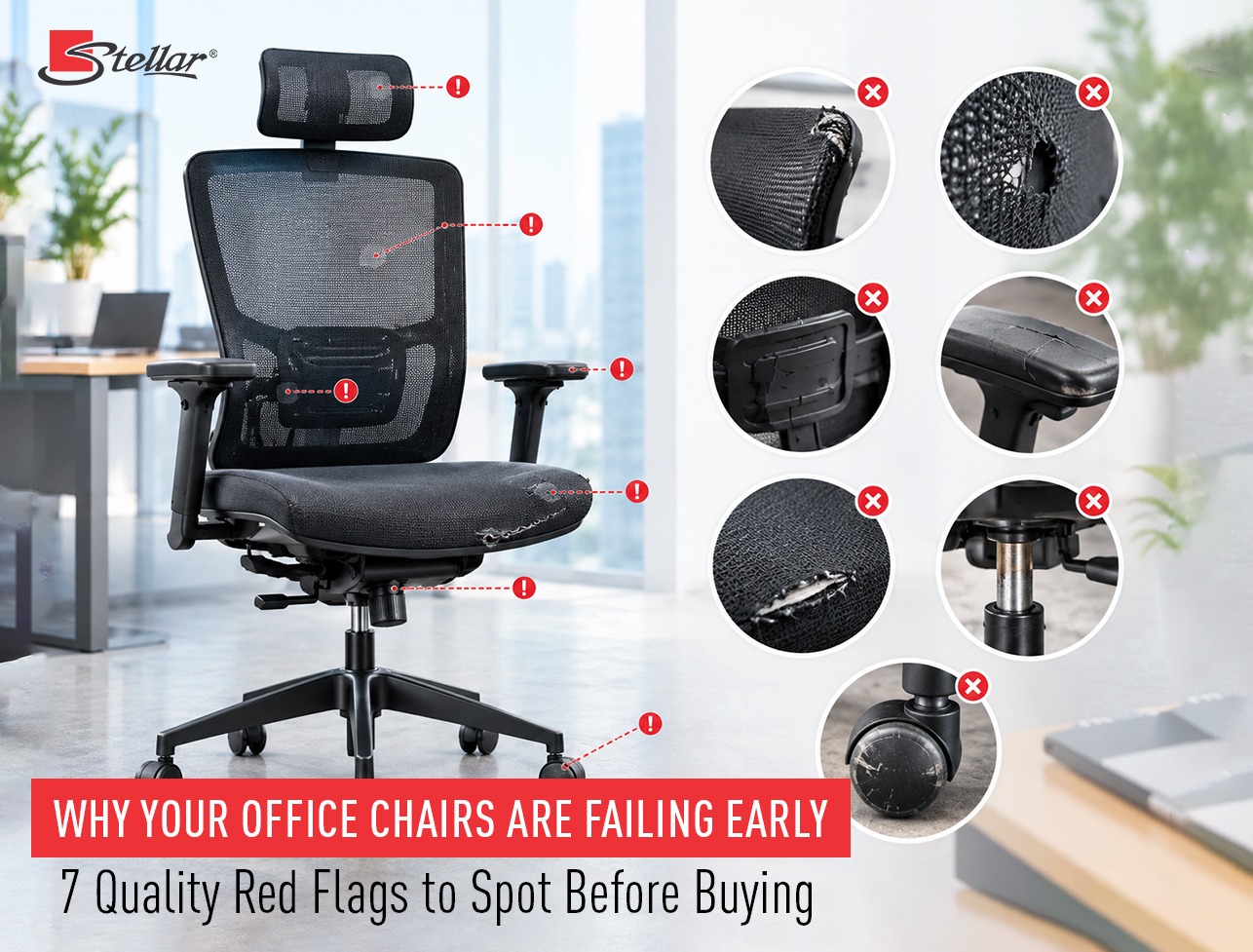
Weight capacity cannot be evaluated independently from overall chair construction. A higher rating is meaningful only if the chair is engineered for sustained commercial use.
This is why procurement teams increasingly focus on commercial grade office chairs rather than residential-style seating marketed for office use. Commercial-grade construction typically emphasizes stronger frames, reinforced mechanisms, durable bases, higher-cycle performance, and long-term workplace reliability.
For organizations managing a large office chair weight capacity bulk order, specifying commercial grade office chairs helps improve consistency across large deployments and reduce lifecycle replacement costs.
A distributor searching for the best office furniture supplier will often prioritize manufacturers with proven commercial-grade production capabilities and documented quality systems.
Not every department requires reinforced seating, but certain environments benefit significantly from enhanced durability. Procurement teams should evaluate user diversity, operating hours and workstation intensity before deciding on upgraded seating categories. Typical applications for enhanced seating include 24-hour operations, security and monitoring centers, call centers with continuous occupancy, shared workstations with multiple users, healthcare administrative areas, training rooms with high daily turnover.
In these environments, heavy duty office chair specifications often provide better long-term value because the chairs are engineered for higher mechanical stress and longer service life. For a large office chair weight capacity bulk order, many organizations use a mixed-specification approach rather than purchasing one chair type for every workstation.
Weight capacity claims should always be supported by documented testing and quality-control processes. Procurement teams should request information on structural testing, mechanism performance, base durability and commercial-use evaluation before approving a chair for large-scale deployment.
This is where office chair load rating standards become especially valuable. They provide a more objective basis for comparing products and identifying chairs designed for professional workplace environments.
When reviewing office chair load rating standards, buyers should also confirm that the tested configuration matches the actual product being supplied in the project specification.
Choosing a chair with insufficient performance capability may reduce initial procurement cost, but it can increase total ownership cost over time. Premature component wear, increased service calls, replacement purchases and inconsistent employee experience can quickly outweigh the original savings.
This is one reason procurement leaders increasingly evaluate office chair weight capacity bulk order decisions through a lifecycle-cost lens rather than a unit-price lens.
For organizations furnishing multiple offices, even small differences in replacement frequency can create substantial long-term budget impacts.
A higher weight rating does not automatically guarantee better ergonomics. The most effective commercial seating programs balance structural performance with adjustability, lumbar support, seat comfort and long-duration usability.
Many commercial grade office chairs are designed specifically to combine ergonomic functionality with reliable structural performance, making them suitable for broad workforce deployment.
When planning an office chair weight capacity bulk order, procurement teams should evaluate both ergonomic fit and durability requirements rather than treating them as separate decisions.
An experienced executive desk models supplier can often support integrated workstation planning by aligning seating and workstation specifications for executive and managerial environments.
Large organizations frequently struggle with inconsistent seating across regional offices. Different chair models, weight ratings and quality levels can complicate maintenance, replacement, training and future procurement.
A standardized specification strategy simplifies purchasing and improves workplace consistency. Many organizations establish a core seating standard supported by one or two enhanced-capacity options for specialized departments.
This approach allows procurement teams to maintain quality consistency while controlling inventory complexity.
For multi-site deployments, standardizing commercial grade office chairs is often more operationally efficient than managing numerous chair variations across locations.
Retailers and wholesalers supplying corporate projects should avoid recommending the highest-capacity chair as a default solution. Instead, they should guide buyers through a structured assessment of workforce profile, operating conditions, ergonomic requirements and budget priorities. A useful consultation process includes:
This consultative approach creates stronger long-term relationships and improves project satisfaction. A reliable China office furniture supplier can further support distributors by providing scalable production options across multiple seating specifications for large commercial programs.
Before finalizing a corporate seating order, procurement teams should verify the following:
This checklist helps reduce procurement risk and improves confidence in large-scale seating investments. Organizations sourcing from specialized mesh chair suppliers should apply the same verification process to ensure breathable seating products also meet commercial performance expectations.
Based on current commercial workplace practices, the most effective strategy for many large organizations is:
This balanced approach supports employee inclusivity, operational efficiency and long-term asset management without unnecessarily inflating project cost.
The right office chair weight capacity for a corporate bulk order is not determined by a single universal number. It is determined by workforce diversity, workplace intensity, operating hours, ergonomic expectations and long-term maintenance objectives.
Organizations that treat office chair weight capacity bulk order planning as a strategic procurement decision are better positioned to reduce replacement costs, improve workplace consistency, support employee comfort and protect long-term furniture investments.
At Stellar Global, our seating collections are developed for the demands of modern commercial environments. From ergonomic task seating to enhanced-capacity workplace solutions, every range is engineered with a focus on durability, ergonomic performance, manufacturing consistency and large-scale project execution for corporate campuses, coworking chains, institutional facilities, retailers, wholesalers and international commercial markets.
As an established office furniture manufacturer with scalable production capability and premium workspace expertise, we understand the importance of selecting the right office chair weight capacity bulk order strategy for complex workplace projects. Explore our commercial seating collections to identify workplace solutions designed for reliable performance, operational consistency and future-ready corporate environments.
Weight capacity refers to the maximum intended user load a chair is designed to support under normal operating conditions. In commercial procurement, it should be evaluated alongside durability, ergonomics and long-term workplace performance.
Most organizations use a standardized mainstream commercial specification for general workstations and a smaller proportion of enhanced-capacity chairs for departments with higher usage intensity or more diverse workforce requirements.
Heavy duty office chair specifications are typically appropriate for 24-hour operations, security centers, call centers, shared workstations and other environments with continuous or intensive seating use.
Office chair load rating standards help buyers compare products objectively by evaluating structural performance, durability, stability and commercial-use suitability through recognized testing processes.
Commercial grade office chairs are seating products engineered for professional workplace environments, with stronger structural components, higher durability expectations and more consistent long-term performance than typical residential-style chairs.
Not necessarily. A mixed-specification strategy is often more cost-effective because many general office environments can be served successfully by standard commercial-grade seating.
Higher-quality commercial seating with appropriate weight capacity can reduce premature wear, maintenance interventions and replacement frequency, leading to lower long-term ownership costs.
Stellar Global combines premium commercial seating design, scalable manufacturing capability, ergonomic expertise, and consistent production quality to support large workplace rollouts across corporate, institutional, retail and international commercial environments.

Stellar Global is a leading international office furniture manufacturer and supplier with over 34 years of industry experience, crafting ergonomic chairs, desks, workstations, and commercial furniture shipped to customers around the world.