Hybrid work, changing employee expectations and the growing demand for workplace efficiency are reshaping how organizations plan their office environments. Traditional planning methods, which relied heavily on assumptions and static layouts, are no longer sufficient for modern workplaces.
This is where AI office furniture planning is making a significant impact. By using workplace data and predictive intelligence, organizations can make more informed decisions about space utilization, furniture deployment and future workplace requirements.
Through AI-powered workplace design, businesses can create more flexible, efficient and future-ready environments while improving employee experience and controlling operational costs. For corporate campuses, coworking chains, institutional projects and large enterprises, artificial intelligence is rapidly becoming a key driver of smarter workplace planning.
Traditional workplace planning typically follows a linear process. Teams estimate requirements, create layouts, purchase furniture and implement the design. While this method worked reasonably well in static office environments, modern workplaces operate differently. Organizations now face challenges such as:
As a result, planning decisions made today may become outdated within months.
This is one reason why AI office furniture planning is gaining traction.
Rather than relying on assumptions, businesses can use real workplace data to guide furniture decisions and space allocation strategies. The result is a more adaptable and scalable workplace environment.
The biggest shift introduced by artificial intelligence is the ability to make planning decisions based on evidence rather than guesswork.
AI-powered workplace design combines workplace analytics, occupancy patterns, employee behavior and operational data to generate smarter planning recommendations. Instead of asking:
“How many desks should we buy?”
Organizations can now ask:
“How many desks are actually being used, when are they being used and how should we configure them for future growth?”
This level of intelligence helps businesses move beyond traditional planning models.
As workplaces become more complex, AI-powered workplace design enables organizations to create environments that are both efficient and adaptable while reducing costly planning errors.
Many organizations assume artificial intelligence works independently, but AI is only as effective as the data it receives. Modern AI office furniture planning combines information from multiple workplace systems to build a realistic picture of how spaces are actually being used.
Depending on the workplace environment, these insights may come from occupancy sensors, Wi-Fi connection data, meeting room booking systems, access control records, desk reservation platforms and workplace management software. Some organizations also use anonymous badge-entry data and space utilization analytics to understand movement patterns across departments.
Rather than tracking individual employees, these technologies identify broader occupancy trends and usage behaviours. This enables AI-powered workplace design to recommend better furniture allocation, smarter layouts and more efficient use of available space based on measurable workplace activity instead of assumptions.
One of the most powerful applications of AI office furniture planning is understanding how employees interact with the workplace. Many organizations are surprised to discover that large portions of their office remain underutilized throughout the week. Artificial intelligence can analyze:
These insights help businesses make better decisions regarding furniture deployment and layout planning.
Rather than purchasing additional furniture unnecessarily, organizations can use smart office space planning strategies to optimize existing assets and improve workspace efficiency.
This not only reduces costs but also creates a more functional workplace experience.
One concern organizations often have is whether workplace analytics monitor individual employees. In most enterprise environments, AI systems are designed to analyse aggregated and anonymized workplace data rather than personal behaviour.
The objective is to understand how spaces are used, not who is using them. Occupancy trends, meeting room utilization and movement patterns are typically evaluated at a group level, allowing organizations to improve AI-powered workplace design while respecting employee privacy and complying with workplace data governance policies.
Traditionally, companies reacted to workplace changes after problems emerged.
Teams outgrew their space, meeting rooms became overcrowded and furniture requirements changed unexpectedly.
Artificial intelligence introduces a more proactive approach.
Using historical data and predictive analytics, AI-powered workplace design can forecast future workspace requirements before they become operational challenges.
For example, AI systems can identify: expected growth in specific departments, Future collaboration requirements, anticipated seating demand, space utilization trends, furniture replacement cycles.
This allows businesses to make informed decisions earlier in the planning process.
As a result, AI workplace optimization helps organizations reduce disruptions while improving long-term planning accuracy.
Managing furniture across multiple locations can be challenging.
Large organizations often operate across corporate offices, coworking facilities, institutional campuses and regional branches. Without visibility, furniture assets may be overutilized in one location while remaining unused elsewhere.
This is where smart office space planning becomes especially valuable.
Artificial intelligence can identify opportunities to reallocate existing furniture, balance resource distribution, improve asset utilization, reduce unnecessary procurement and even support future expansion plans.
Instead of treating furniture as a fixed asset, organizations can manage it as a dynamic resource that evolves with workplace needs.
This is one of the key advantages of modern AI office furniture planning strategies.
Hybrid work has fundamentally changed workplace utilization.
Many organizations now experience significant fluctuations in office occupancy depending on the day of the week, department schedules and project requirements.
Planning furniture requirements for these environments can be difficult using traditional methods.
Through AI-powered workplace design, businesses can analyze attendance patterns and determine how spaces are actually being used. This supports better decisions regarding:
As hybrid work continues to evolve, AI workplace optimization enables organizations to align furniture investments with actual workplace behavior rather than theoretical assumptions.
Many organizations believe adopting AI requires a complete workplace transformation. In reality, implementation is often gradual and built around existing workplace systems.
Step 1: Collect Reliable Workplace Data
Begin by understanding how employees actually use the office. Data from occupancy sensors, desk booking platforms, Wi-Fi analytics and meeting room systems provides a clear picture of workplace utilization.
Step 2: Analyse and Model Different Scenarios
Once sufficient data has been collected, AI models identify utilization trends, predict future workspace requirements and recommend furniture layouts that improve efficiency. Digital twins can then simulate multiple workplace configurations before any physical changes are made.
Step 3: Execute, Measure and Continuously Improve
The final stage focuses on implementing the selected layout, monitoring workplace performance and refining furniture allocation as business needs evolve. This allows AI workplace optimization to become an ongoing process rather than a one-time project.
One of the most exciting developments in modern office furniture technology is the use of digital twins. A digital twin is a virtual representation of a physical workspace that allows organizations to simulate changes before implementation.
Using digital twins, businesses can evaluate layout modifications, furniture placement strategies, team expansions, department relocations and occupancy changes too.
So, instead of making costly adjustments after installation, organizations can test different scenarios virtually and identify the most effective solution! This capability is becoming an increasingly important component of AI office furniture planning because it reduces risk while improving decision-making accuracy.
For example, before relocating 500 employees to a new corporate campus, planners can compare multiple workstation layouts, collaboration zones and circulation paths digitally. Instead of discovering bottlenecks after installation, organizations identify them during the planning stage, reducing project revisions and improving decision-making accuracy.
Workplace performance is closely connected to employee experience. Poorly planned environments can contribute to reduced productivity, increased distractions, space congestion, collaboration challenges or even workplace dissatisfaction. Artificial intelligence helps organizations understand how workplace design influences employee behavior.
By analyzing movement patterns, interaction data and workspace utilization, AI-powered workplace design can recommend layouts that better support employee needs. This approach enables more effective smart office space planning by creating environments that balance collaboration, focus work, flexibility and comfort.
As a result, organizations can improve both workplace performance and employee satisfaction.
Planning is only one part of successful workplace delivery; execution remains equally important.
One of the biggest challenges in large-scale furniture projects is maintaining alignment between planning, procurement, manufacturing and installation.
Modern office furniture technology is helping solve this by connecting these stages into a more coordinated workflow. When project information, approvals, specifications and timelines remain aligned, organizations gain better visibility, reduce communication gaps and improve execution accuracy.
This allows AI workplace optimization efforts to move beyond theoretical planning and support real-world project outcomes.
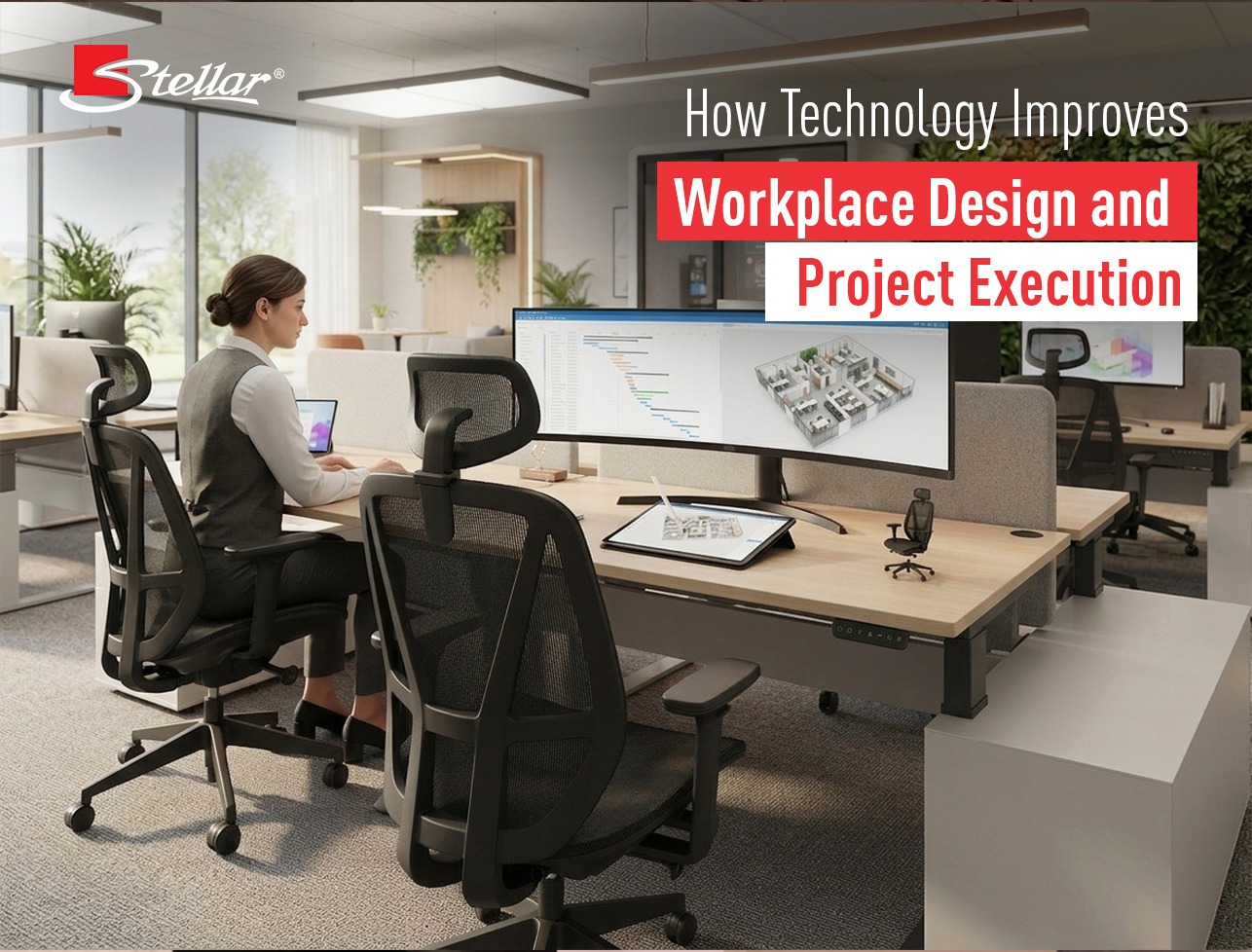
While AI can recommend better workplace layouts and furniture strategies, successful projects still depend on how those plans are executed. Design approvals, product specifications, procurement, manufacturing, logistics and installation all need to stay aligned throughout the project lifecycle.
This is where connected project management platforms become valuable. Solutions such as Workplai help centralize layouts, specifications, approvals and project milestones into a single workflow, giving stakeholders greater visibility from planning through execution.
For organizations managing corporate campuses, coworking networks and multi-location workplace rollouts, this creates a stronger connection between AI office furniture planning and real-world delivery. Instead of working across disconnected spreadsheets, emails and approvals, project teams can collaborate through one coordinated system, reducing delays, improving communication and minimizing execution risks.
Furniture procurement has traditionally been influenced by estimates and assumptions. Artificial intelligence introduces greater precision into the process.
Through AI office furniture planning, organizations can forecast actual furniture requirements based on data rather than broad projections.
This helps businesses:
When combined with smart office space planning, AI enables organizations to maximize value from existing resources before investing in new furniture.
This creates measurable operational and financial benefits across large-scale workplace environments.
Beyond improving layouts, organizations increasingly evaluate AI office furniture planning through measurable business outcomes.
Studies across enterprise workplaces have shown that data-driven workplace planning can reduce underutilized office space by 15–30%, depending on occupancy patterns and hybrid work adoption. Better space utilization also helps organizations improve furniture asset usage, reduce unnecessary procurement and optimize real estate costs over time.
For organizations managing multiple facilities, these gains extend beyond cost reduction. Better planning also supports faster workplace rollouts, more predictable procurement and stronger return on furniture investments.
The future of workplace planning will become increasingly data-driven.
As artificial intelligence continues to evolve, organizations can expect advances in real-time occupancy intelligence, automated space recommendations, predictive maintenance planning, furniture lifecycle optimization, dynamic workspace configuration and workplace performance analytics.
These developments will further strengthen the role of modern office furniture technology in helping organizations create more agile and efficient workplaces. Businesses that embrace these innovations early will be better positioned to adapt to changing workforce expectations and evolving operational requirements.
The next generation of AI-powered workplace design will focus not only on creating attractive workplaces but also on ensuring those workplaces continuously improve over time.
Artificial intelligence is redefining how modern workplaces are planned, furnished and managed. What was once a largely static process is becoming a dynamic, data-driven strategy powered by real workplace insights.
Through AI office furniture planning, organizations can make smarter decisions about space utilization, furniture allocation, workplace flexibility and long-term growth. Combined with AI-powered workplace design, these capabilities help businesses improve efficiency, enhance employee experiences and maximize the value of workplace investments.
At Stellar Global, we believe the future of workplace planning lies in connecting intelligent insights with practical execution. By combining premium workspace furniture manufacturing with advanced planning capabilities and integrated solutions such as Workplai, we help organizations transform workplace intelligence into scalable, high-performing environments.
Whether you are planning a corporate campus, coworking network, institutional facility, or multi-location workplace rollout, our approach is built around smarter execution, better visibility and future-ready workspace outcomes.
If your organization is exploring the next generation of smart office space planning, AI workplace optimization and modern office furniture technology, connect with us and discover how intelligent workplace planning can create lasting business value.
AI office furniture planning uses artificial intelligence, workplace analytics, and occupancy data to help organizations make smarter decisions about furniture deployment, space utilization, and workplace design.
AI-powered workplace design analyzes workplace behavior, occupancy patterns, and collaboration needs to create layouts that improve efficiency, flexibility, and employee experience.
Smart office space planning uses data and technology to optimize workplace layouts, improve space utilization, and support evolving business requirements more effectively.
AI workplace optimization helps organizations avoid unnecessary furniture purchases, improve asset utilization, forecast future requirements, and reduce operational inefficiencies.
Modern office furniture technology supports workplace intelligence through digital planning tools, connected systems, predictive analytics, and integrated project execution platforms.
Yes. AI can analyze occupancy trends and employee attendance patterns, allowing businesses to create more efficient seating strategies, collaborative spaces, and flexible work environments.
Digital twins allow organizations to simulate workplace changes virtually before implementation, reducing risk and improving planning accuracy.
Integrated platforms help connect workplace planning, procurement, manufacturing, and installation processes, ensuring that planning decisions translate into successful project execution.

Stellar Global is a leading international office furniture manufacturer and supplier with over 34 years of industry experience, crafting ergonomic chairs, desks, workstations, and commercial furniture shipped to customers around the world.