For global furniture manufacturers, growth only matters if quality grows with it. That is where furniture manufacturing scalability becomes the real test. A factory can produce one strong sample easily. The harder challenge is producing the same quality again and again across large orders, multiple product lines and different markets without losing control.
That’s why global furniture production quality is not just a manufacturing outcome; it is a system discipline built on standard work, quality management and repeatable execution. ISO’s quality management framework is built around consistently meeting customer expectations and continually improving processes, while lean thinking has long emphasized that sustainable improvement depends on standardized work.
The first misconception about furniture manufacturing scalability is that it simply means increasing volume. In reality, true scalability means increasing output while keeping specifications, finishes, tolerances and performance steady across every unit. That is the foundation of global furniture production quality.
In large-scale furniture manufacturing, the real challenge is not whether a product can be made once; it is whether the process can be repeated hundreds or thousands of times with the same result. This is where furniture quality control at scale becomes a manufacturing mindset rather than a final inspection step.
ISO 9001 frames this as a quality management system that helps organizations deliver consistent products and improve efficiency, which is exactly what high-volume furniture producers depend on.
The most successful global furniture manufacturers do not scale by allowing every order to become unique. They scale by creating repeatable design systems. Standardized components, controlled material libraries and locked production specifications make it possible to grow without losing control.
That is how furniture manufacturing scalability turns into operational strength. It is also how global furniture production quality remains stable across bulk office chairs, executive desk systems, modular workstations and lounge products. Lean’s approach to standardized work reinforces a simple idea: when processes are defined clearly, variability falls and performance becomes more predictable. That predictability is what allows large-scale furniture manufacturing to move from a risky operation to a dependable one.
One of the most important lessons in furniture quality control at scale is that quality cannot be checked into the product at the last minute. It has to be designed into every stage, from raw material selection to final dispatch.
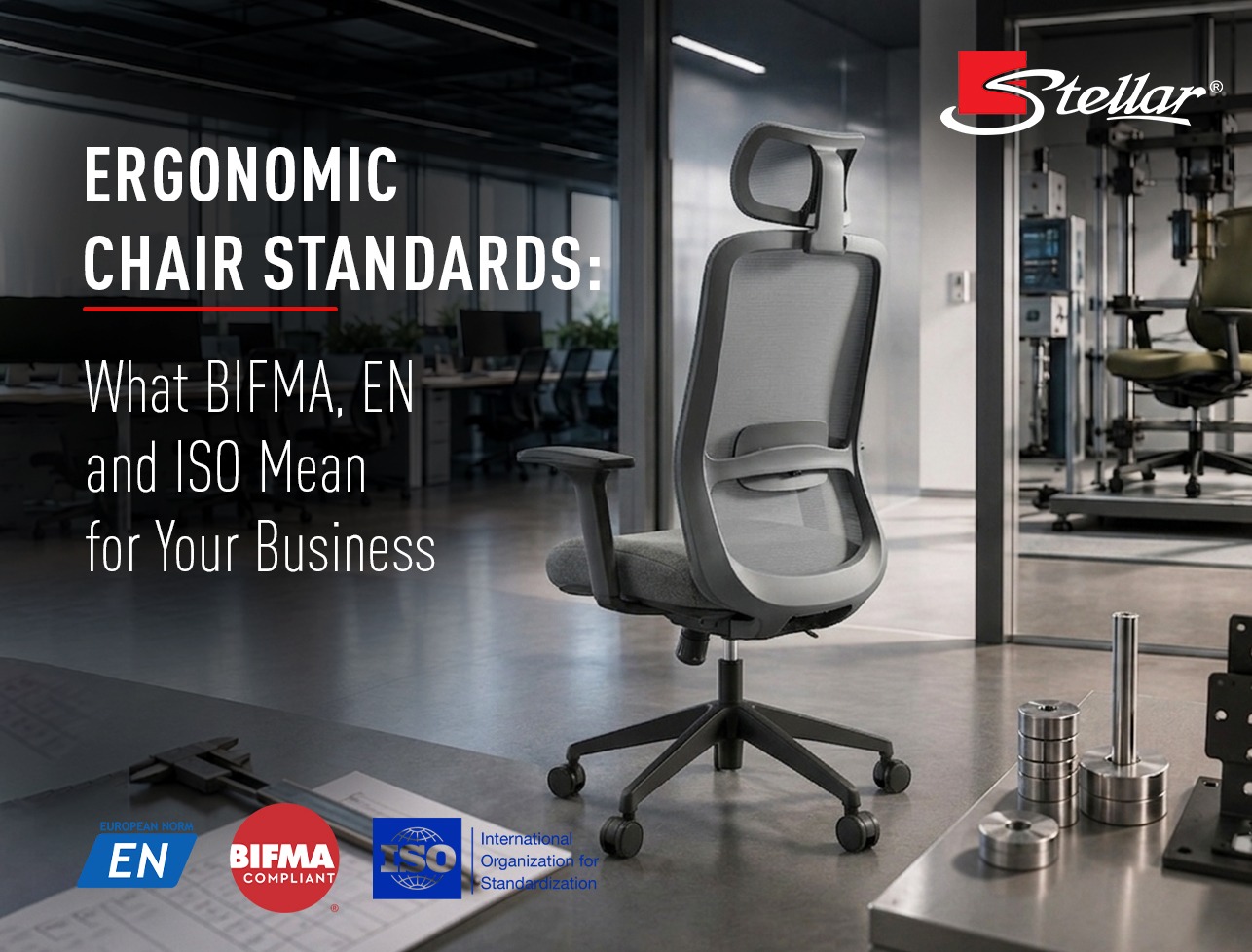
That is why global furniture production quality depends on layered checkpoints, not a single final inspection. BIFMA’s standards for office seating are a useful example of how performance, safety and durability are measured through formal testing rather than visual judgment alone.
For general-purpose office chairs, BIFMA’s X5.1 standard and its compliance registry exist to distinguish products that merely look complete from products that are tested for real-world use.
For a premium office chair supplier, that means every frame, mechanism, castor and load-bearing component must be validated before the product leaves the line. For an executive desk models supplier, it means structural consistency has to remain intact across every batch.
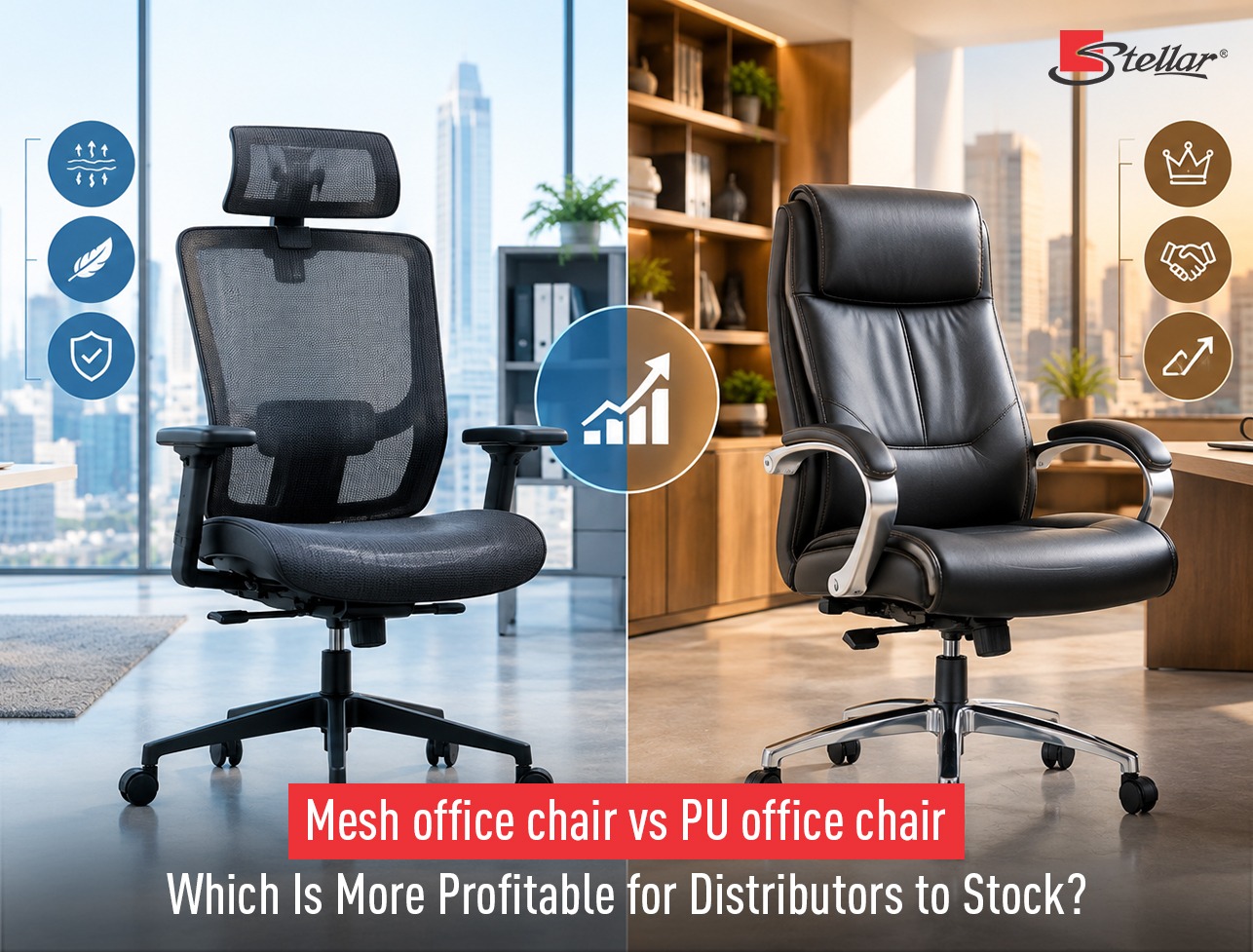
For mesh chair suppliers, it means material tension, breathability and back support need to remain stable across repeated production runs. This is the practical side of furniture manufacturing scalability: the process becomes strong enough to prevent variation from entering the system. It is also what helps a best office furniture supplier earn long-term trust in bulk projects.
Even the best product can fail if the supply chain is weak. That is why furniture supply chain management is a quality issue, not only a logistics issue. In large-scale furniture manufacturing, materials must arrive on time, batches must be synchronized, packaging must protect components and dispatch timing must match the installation schedule.
If any one of those layers slips, furniture quality control at scale becomes harder to maintain because the product is no longer moving through a controlled environment. ISO’s quality management resources emphasize that quality operations must deliver consistency, transparency and control across the supply chain, which is exactly what global furniture manufacturers need when serving international projects.
This is also where a china office furniture supplier with strong internal systems has a major advantage. It can support bulk office furniture orders more efficiently when the supply chain is integrated from sourcing to packing. That matters for an office furniture supplier handling corporate campuses, institutional buyers and retailers that need repeatable output.
Furniture manufacturing scalability depends on whether the supply chain can hold up under pressure without creating delays or quality drift.
In other words, global furniture production quality is only as strong as the chain that carries it.
A design that looks premium in a showroom may be difficult to reproduce at scale. That is why experienced manufacturers think about repeatability from day one. Large-scale furniture manufacturing succeeds when the product is engineered for stable production, easy assembly and reliable replacements.
For example, a mesh back, a tilt mechanism or a desk frame must not only look right but also be easy to manufacture consistently across all batches. That is where furniture manufacturing scalability and global furniture production quality meet. The more repeatable the design system, the lower the risk of batch drift, assembly issues and replacement mismatch.
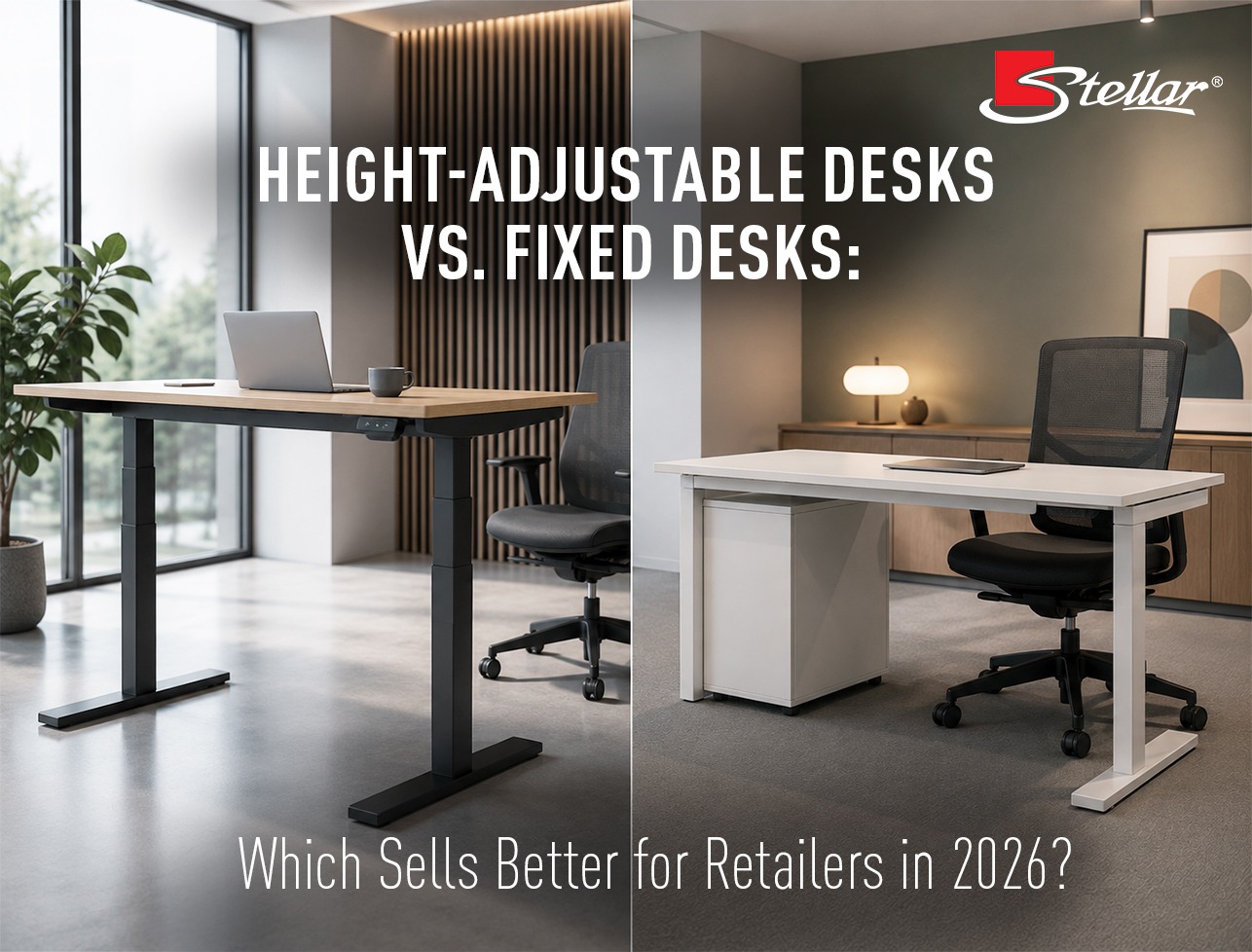
This is also why a modern office furniture supplier will often favor modular components and standardized hardware. Modular systems make it easier to support bulk office chairs, workstations and lounges without creating hidden complexity. They also make it easier for an office chair supplier to maintain consistent performance across markets, which is exactly what large buyers want when they source at scale. In practical terms, furniture quality control at scale begins at the drawing board, not on the packing line.
A factory can only scale safely if it has manufacturing discipline built into the process. That means standard operating procedures, defined tolerance limits, trained teams and quality checkpoints that do not depend on memory or improvisation.
ISO’s quality management framework describes this as a clearly defined system of processes and responsibilities, while lean methods emphasize that standardized work is essential for sustaining performance.
In furniture, this is what protects global furniture production quality when production volumes rise.
At Stellar Global, this kind of discipline is central to how the company presents itself as a premium office furniture manufacturer. With over 34 years of experience, exports reach across 100+ countries and certifications including BIFMA, ANSI, BSCI, EN and ISO. Those are not just badges; they signal the kind of manufacturing control that supports furniture manufacturing scalability at an international level.
For bulk buyers, quality is never just about the factory floor. It is about what happens after the furniture reaches the site. When a chair feels inconsistent, when a desk assembly varies or when a batch arrives with mismatched finishes, the client experiences the failure immediately.
That is why furniture quality control at scale must protect the end-user experience, not just the product spec. The brands that do this well understand that large-scale furniture manufacturing is a customer promise, not only a production target.
This is also why buyers often look for an office furniture supplier, an office chair supplier or an executive desk models supplier that can prove repeatability, not just promise it.
The strongest furniture supply chain management systems are the ones that make every order feel like a continuation of the same standard, even when the project spans multiple sites or countries. That consistency is what turns a china office furniture supplier into a long-term partner rather than a short-term vendor.
At Stellar Global, we view furniture manufacturing scalability as a controlled system rather than simply a production target. We standardize intelligently, test rigorously, manage our supply chain proactively and safeguard global furniture production quality at every stage of the manufacturing journey.
We understand that furniture quality control at scale is not a final inspection step; it is a discipline embedded into every process, every material decision and every production milestone. We also recognize that successful large-scale furniture manufacturing depends on seamless coordination between design, engineering, production and logistics.
This philosophy guides every project we undertake. From large deployments of ergonomic office chairs and mesh seating solutions to workstations, collaborative furniture systems and executive office collections, we focus on combining manufacturing precision with consistent quality outcomes at scale. As a trusted office furniture manufacturer and supplier, we are committed to delivering reliability across every order.
If your organization is looking for the best office furniture supplier capable of scaling production without compromising quality, connect with us at and discover how we help businesses build premium workspaces with confidence.
They maintain quality by standardizing processes, locking material specifications, using defined quality checkpoints and applying quality management systems that support consistency. ISO’s quality management framework is built around consistency, customer satisfaction and continual improvement, which is why it aligns well with furniture manufacturing scalability. When done properly, global furniture production quality does not drop as output rises; it becomes more controlled.
Furniture quality control at scale ensures that every batch looks, feels and performs like the approved sample. In large projects, even small variations can create installation issues or visible inconsistencies across floors and locations. Strong quality control helps protect user experience, reduce complaints and support long-term confidence in the brand.
Furniture supply chain management keeps materials, production, packaging and dispatch aligned so that quality is not lost before installation. In large-scale furniture manufacturing, even a small delay or mismatch can create site-level disruption. A well-managed supply chain protects both schedule and product consistency.
A china office furniture supplier can support bulk projects by combining manufacturing capacity with export experience, standardized production and a broad product range. The key is not just location, but process maturity. Buyers should look for an office furniture supplier that can support repeat production, quality consistency and long-term project execution.
They should expect consistency, transparency, reliable lead times and strong support across production and delivery. A best office furniture supplier should also be able to manage bulk office chairs, desks, workstations and related categories without quality drift. In other words, they should be able to combine scale with dependable global furniture production quality.

Stellar Global is a leading international office furniture manufacturer and supplier with over 34 years of industry experience, crafting ergonomic chairs, desks, workstations, and commercial furniture shipped to customers around the world.