Updated on May 16, 2026, for accuracy and clarity.
Office Furniture retailers, wholesalers and e-commerce brands in Mexico, Brazil, Latin America and worldwide, need to be aware of emerging trends that are shaping the new furniture industry landscape in order to take advantage of these changes.
Fundamental shifts in Latin American consumers’ buying preferences can pose new challenges but can also open doors to new opportunities for those willing to adapt. By understanding these changing industry trends, furniture resellers can capitalize on these changes to position their business for continued success.
In this blog we will explore the challenges for office furniture retailers in Latin America and their solutions.,

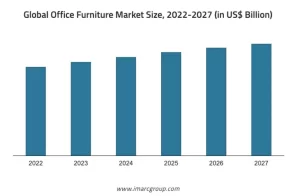
The global office furniture market reached a value of US$ 58.4 Billion in 2021. Looking forward, IMARC Group expects the market to reach US$ 74.7 Billion by 2027, exhibiting a CAGR of 4.1% during 2022-2027. The office furniture market in Latin America is also very large with the largest markets being Brazil and Mexico followed by Argentina, Venezuela, Colombia, Chile, Costa Rica, Ecuador, Guatemala, Panama, Paraguay, Peru and Uruguay.
Top office furniture manufacturing companies include Herman Miller, Steelcase and Urban Office but there is a very large spectrum of people who cannot afford to pay more than a thousand US dollars that these brands cost. Therefore alternate manufacturing locations like China, India, Turkey, and Vietnam have emerged as manufacturing hubs, and today over 40% of the world’s office furniture is made in China alone by companies like Stellar. There is also a lot of local manufacturing happening in Latin American countries, which has resulted in industry leaders like Tok&Stok, Mobly, and several others.
A lot of people today are averse to buying and owning things so renting or leasing has become a preferred way of using goods/services and led to many innovative models like rent-to-own which itself is worth about $8.5 billion annually and is increasingly growing among consumers.
Heightened unemployment and decreasing consumer spending as a result of the COVID-19 pandemic have curbed discretionary purchases, such as new furniture, and have negatively affected demand. In addition, income constraints are expected to amplify price-based competition between domestic operators and foreign import substitutes, contributing to industry consolidation.
The Russia Ukraine crisis has lingered on for several months now, and with recession looming on the horizon, we are undoubtedly faced with macro-economic trends that nobody can pinpoint with certainty.
Online retailing will continue to be a preferred buying channel – nearly 15-20% furniture today is bought online and it is an increasing trend. By utilizing the internet and social media, millennials tend to be skilled comparison shoppers and will spend a couple of weeks researching products before making a purchase. This means office furniture manufacturers will need to tailor their products to these online platforms and include details – and options – for their younger prospective customers.
But there is also some good news – the expected revenue is on the rebound in 2022 due to increased consumer spending with returned employment and boosted demand for industry operators. Furniture and home furnishings consumption growth through the first five months of 2022 increased 31% from the same period the previous year.
By taking advantage of the solutions mentioned below, furniture retailers and wholesalers can position themselves for continued success and growth in an evolving market.
Renters are likely to look for more affordable furniture options in the same manner as landlords will opt for more cost-effective furniture when they lease their offices/homes with a growing number renting their furnishings rather than outright buying them. To turn this challenge into an opportunity, furniture brands may want to add more items to their inventory of inexpensive, streamlined, or multipurpose furniture to suit these smaller living spaces, as multifunctional furniture is rapidly gaining popularity.
Furniture brands need to diversify their products to cater to the specific needs of each demographic group. While this may mean additional investment in new design and innovation, it also creates new possibilities for additional revenue sources. Huddle up with your sales and marketing teams and your office furniture manufacturing partner to find out what styles, materials and trends are popular in different regions or your own and adjust your furniture purchase buy plan to get more fast-selling products that improve your revenue to inventory ratio.
Online retailers have taken away a good portion of the market share of brick-and-mortar retailers – especially since pandemic restrictions kept everyone home. This move from physical to virtual platforms was already gaining momentum before 2020, but now virtual selling is more important than ever for furniture brands to start embracing online and mobile technology. This increase in online shopping means an opportunity to sell to online retailers that are not limited to a physical geographic area. Check with your furniture manufacturer if they can provide e-commerce-friendly product images, videos, titles, descriptions, assembly instructions, etc., that will make your office furniture e-commerce business more successful.
Summary
While these are a few of the recent challenges and trends affecting the Office Furniture industry, the market will continue to change as new technologies are introduced throughout the future. By adopting these solutions – and an adaptive mindset – furniture brands can position themselves for success through change.
If you are an office furniture retailer or interior designer/architect in #Brazil #Mexico #Argentina #Venezuela #Colombia #Chile #CostaRica #Ecuador #Guatemala #Panama #Paraguay #Peru or #Uruguay and are looking to buy new furniture, you must contact Stellar who is a leading multi-national #OfficeFurniture manufacturer in China. We also undertake end-to-end commercial projects for large commercial spaces and universities.
Stellar has been in the business for the last 32 years and exports to over 100+ countries across the world, from its factories in China and India. To discuss the needs of your organization and see how we can be of service. Write to us at contactus@stellarglobal.com
1. What are the biggest challenges faced by office furniture retailers in Latin America?
The biggest challenges faced by office furniture retailers in Latin America include rising competition, supply chain disruptions, changing customer expectations, and price-sensitive markets. Retailers also face difficulties in maintaining inventory, managing logistics, and offering modern office furniture at competitive prices.
Many businesses now expect ergonomic and flexible office furniture solutions, which increases pressure on retailers to constantly update their product range. Economic fluctuations and import-related delays can also impact project timelines and profitability.
To stay competitive, office furniture retailers must focus on reliable sourcing, strong customer service, and adaptable business strategies that align with changing workplace trends.
2. Why is e-commerce important for office furniture retailers in Latin America?
E-commerce is important because customers increasingly search, compare, and purchase office furniture online before making buying decisions. A strong online presence helps office furniture retailers reach more customers and improve brand visibility across different regions.
Digital platforms allow retailers to showcase office desks, workstations, ergonomic chairs, and complete office furniture solutions more efficiently. Online catalogs, virtual consultations, and digital marketing also help retailers generate more leads and commercial inquiries.
As businesses continue adopting digital purchasing habits, retailers with strong e-commerce strategies gain a competitive advantage in the growing office furniture market.
3. How can office furniture retailers overcome supply chain challenges?
Office furniture retailers can overcome supply chain challenges by partnering with reliable manufacturers, improving inventory planning, and diversifying sourcing strategies. Strong supplier relationships help reduce delivery delays and maintain product consistency.
Retailers should also focus on forecasting demand accurately and maintaining balanced stock levels to avoid shortages during large office projects. Working with experienced global office furniture manufacturers can further improve logistics efficiency and project execution.
A stable supply chain helps retailers deliver office furniture projects on time while improving customer satisfaction and long-term business growth.
4. Why are imported office furniture products becoming popular in Latin America?
Imported office furniture products are becoming popular because they offer modern designs, competitive pricing, and better ergonomic features. Many businesses in Latin America want premium-looking office furniture solutions at affordable prices.
Imported office desks, workstations, and ergonomic chairs often provide better material quality, modular flexibility, and contemporary aesthetics compared to limited local options.
As workplace design standards continue evolving, businesses increasingly prefer imported office furniture that supports productivity, comfort, and modern office layouts.
5. How can office furniture retailers stay competitive in a changing market?
Office furniture retailers can stay competitive by offering modern products, improving customer experience, and adapting to workplace trends. Retailers that understand changing office requirements can better attract commercial buyers and long-term clients.
Focusing on ergonomic office furniture, modular workstations, and flexible office layouts helps retailers meet current market demand. Strong online visibility, fast response times, and reliable after-sales support also improve customer trust.
Retailers that continuously update their product offerings and sourcing strategies are more likely to succeed in competitive office furniture markets.
6. What role do office furniture manufacturers play in helping retailers grow?
Office furniture manufacturers help retailers grow by providing quality products, customization support, and reliable supply capabilities. Strong manufacturing partnerships allow retailers to offer competitive office furniture solutions to commercial clients.
Manufacturers also support retailers with product innovation, workspace planning assistance, and efficient project execution for large office furnishing requirements.
Reliable office furniture manufacturers help retailers reduce operational risks while improving customer satisfaction and business scalability.
7. Why is ergonomic office furniture demand increasing in Latin America?
Ergonomic office furniture demand is increasing because businesses now prioritize employee comfort, productivity, and workplace wellness. Companies understand that comfortable employees perform better and experience less physical strain during long working hours.
Ergonomic office chairs, adjustable desks, and modular office workstations help improve posture and create healthier work environments. Hybrid work trends have also increased awareness about the importance of ergonomic office setups.
As businesses focus more on employee well-being, demand for ergonomic office furniture continues to grow across Latin America.
8. How can office furniture retailers benefit from the rental furniture market?
Office furniture retailers can benefit from the rental furniture market by creating recurring revenue opportunities and attracting flexible workspace clients. Many startups, temporary offices, and project-based businesses prefer rental office furniture solutions instead of large upfront investments.
Furniture rental services also help retailers expand their customer base while meeting growing demand for flexible office arrangements. Rental models are especially useful for co-working spaces, event setups, and short-term office projects.
Offering rental office furniture solutions can help retailers diversify income streams and improve long-term business stability.
9. What should retailers look for when choosing an office furniture supplier?
Retailers should look for quality, reliability, customization capabilities, and logistics support when choosing an office furniture supplier. A dependable supplier helps retailers maintain customer satisfaction and complete projects efficiently.
Strong office furniture suppliers provide durable products, modern designs, consistent inventory availability, and professional after-sales support. Experience in handling commercial office projects is also an important factor.
Choosing the right office furniture supplier helps retailers improve operational efficiency and strengthen their market reputation.
10. How are modern workplace trends influencing office furniture demand in Latin America?
Modern workplace trends are increasing demand for flexible, ergonomic, and collaborative office furniture solutions. Businesses now prefer modular office workstations, open office layouts, and technology-friendly furniture systems.
Hybrid work models have also changed office design priorities, leading companies to invest in adaptable and space-efficient office furniture. Employers want furniture that supports teamwork while maintaining employee comfort and productivity.
As office environments continue evolving, demand for modern office furniture solutions will continue growing across Latin America.

Stellar Global is a leading international office furniture manufacturer and supplier with over 34 years of industry experience, crafting ergonomic chairs, desks, workstations, and commercial furniture shipped to customers around the world.